August 31, 2026
Malt Based Food Products: A Nutritious and Versatile Ingredient for Modern Food Manufacturing
Introduction
The food industry has undergone transformations that have constantly evolved to suit consumer demand for products that are healthier, natural and contain functional ingredients. In this particular context, Malt based food products have developed as one of the prominent solutions because of their interesting nutritional, taste and usability properties. Malt is acquired from selected and processed cereals, primarily barley, wheat, and rye and is used for manufacturing bakery products, cereals, beverages, confectionery, dairy and nutrition products.
Whereas malt has always been used in food and beverage manufacturing, today companies are applying malt products in the food industry due to their various beneficial properties.

What Are Malt Based Food Products?
Food ingredients and products derived from malt are called malted products. Malting is the procedure of soaking grains, letting them sprout, and drying them afterward. It happens by enabling different enzymes to act upon the grains and turn complex sugars into simple sugars.
There are many malt products formed after the process, including:
• Malt extract
• Malt syrup
• Malt powder
• Malt flour
• Liquid malt extract
• Spray dried malt extract
All of the above products find application in many food industries because of their sweetness and unique properties.
Nutritional Value of Malt Based Food Products
One of the main reasons behind the increasing popularity of malt-based food products is their nutritional value. Malt has several essential nutrients that aid in ensuring the health of consumers.
Natural Source of Carbohydrates
Malt offers carbohydrates that work well as an energy source. The natural sugars formed during the malting process are responsible for making the malt-based ingredients a perfect choice for energy drinks, health supplements, and breakfast items.
Provides Essential Vitamins
Malt is a natural source of several B complex vitamins, such as:
• Thiamine (B1)
• Riboflavin (B2)
• Niacin (B3)
• Folic acid
These vitamins help with metabolism, energy generation, and general wellbeing.
Provides Essential Minerals
The malt based ingredients offer essential minerals, which include:
• Potassium
• Magnesium
• Phosphorus
• Iron
• Zinc
These minerals help in the formation of strong bones and muscles and play an important role in metabolism.
Aids in Digestion
Some of the malt ingredients are rich in dietary fibers and natural components that can help in promoting healthy digestion.
Types of Malt Based Food Products
Malted Health Drinks
Malted beverages are among the most popular malt based food products. These drinks are widely consumed by children and adults as a source of nutrition and energy. The addition of malt improves taste while contributing valuable nutrients.
Breakfast Cereals
Many cereal manufacturers use malt extracts and malt syrups to enhance flavor, sweetness, and texture. Malt helps create a more appealing product without relying heavily on refined sugar.
Bakery Products
Malt plays a critical role in bakery applications. Bakers use malt flour and malt extract to improve fermentation, dough handling, crust color, and product shelf life.
Common bakery applications include:
- Bread
- Cookies
- Cakes
- Muffins
- Biscuits
- Pastries
Confectionery Products
The confectionery industry uses malt ingredients in chocolates, candies, malted milk products, and dessert toppings. Malt contributes a distinctive flavor and pleasant sweetness that enhances product appeal.
Dairy-Based Products
Malt is frequently incorporated into flavored milk, milkshakes, dairy beverages, and nutritional dairy products. Its rich taste complements dairy formulations while adding nutritional value.
Snack Foods
Food manufacturers use malt ingredients in snack products to improve flavor, texture, and consumer acceptance. Malt-based seasonings and coatings are becoming increasingly common in innovative snack formulations.
Benefits of Using Malt Based Food Products
Malt as a Natural Sweetening Option
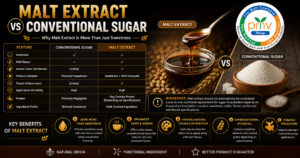
The second major benefit of using malt ingredients is the natural sweetness that comes with them. Manufacturers have an option to replace highly processed sugar in specific food products with malt extract and malt syrup.
Improved Flavor
Malt has a distinct rich and roasted flavor that improves the taste of food products. This characteristic makes malt a very versatile ingredient in a number of foods.
Improved Texture and Mouthfeel
Malt helps in improving the texture and mouthfeel of baked goods and other processed foods.
“Clean Label” Trend Compliance
Due to consumer demands, there has been a growth in the popularity of clean-label products. Malt perfectly fits into the category of such products due to its natural origins and traditional processing technology.
Product Stability Improvement
Malt ingredients ensure better consistency in the production of different types of foods.
Applications of Malt Based Food Products in the Food Industry
Bakery Industry
The bakery industry is still among the biggest consumers of malt products. Malt helps improve fermentation processes and enhances yeast activities, as well as providing a good crust color and taste.
Beverage Industry
Malt extracts are utilized in various drinks such as nutritional beverages, malt drinks, flavored beverages, and special beverages because of their high nutritional value and sweetness.
Nutritional Food Industry
Supplements manufacturers and makers of enriched foods use malt products for obtaining carbohydrate, vitamins, and mineral content.
Infant Nutrition
Because of their nutritional content and digestibility, malt-based products can be added to certain infant formulas and children’s nutrition products, depending on regulations.
Confectionery Manufacturing
Malt brings sweetness, taste, and texture to different confectioneries, and hence is a popular choice for novel product manufacturing.
Why Food Manufacturers Choose Malt Ingredients
There are multiple reasons behind the choice of the malt based food items by the food manufacturers which include the following:
– The natural ingredient profile
– Functional processing benefits
– Improved taste and texture of food
– Labels that are consumer friendly
– Nutritional enhancement
– Versatility in applications
– Consistent performance of products
All of these advantages facilitate the manufacturers in the preperation of products that fulfill the consumer requirements as well as the quality standards set in the industry.
Future Trends in Malt Based Food Products
Malt-based food products are likely to continue their growth owing to the consumers’ keen preference for healthier natural food products. Several trends are instrumental in this growth. These trends include:
• Clean-label food formulations
• Decrease in the use of artificial additives
• Usage of natural sweetening alternatives
• Functional and fortified foods
• Use of sustainably-sourced ingredients
• Plant-based nutrition solutions
With innovations in the food industry, malt ingredient will become very significant in devising healthy and palatable food items.
Conclusion
Malt based food products are gaining prominence in the food production industry owing to their numerous nutritional benefits. These products are used in multiple applications such as baked goods, breakfast cereals, drinks, and confectionary items. The growing demand for clean label and natural food products means that malt food items have a bright future in regards to innovation in food manufacture.
Frequently Asked Questions (FAQs)
1. What are the malt based food products?
These are food products that have been manufactured using malted grains or derivatives of malts like malt extract, malt powder, malt flour, and malt syrup.
2. What types of grains are used in making malts?
Barley is the main grain used in the process of malting, however, wheat, rye, and others may also be used.
3. What are the advantages of malt based food products?
Some of the advantages include natural sweetness, improved flavor, nutritional value, improved texture and functionality in food processing.
4. Do malt based food products get used in bakery products?
The malt ingredients are extensively used in baked goods like bread, cakes, cookies, biscuits and others to enhance their quality and flavor.
5. Is malt extract able to act as a sweetener?
Yes, malt extract and syrup are used to make natural sweeteners for various beverages and food products.
6. In what type of industries do malt based food products get used?
Malt ingredients are used in bakery, beverage, dairy, confectionery, snack food, and nutritional supplements industries.
7. Why are malt based food products used in clean-label products?
Malt is derived from natural grains and supports clean-label formulations by providing flavor, sweetness, and functionality without relying heavily on artificial ingredients.