June 22, 2026
Why Use Malt Extract Instead of Conventional Sugar?
Sugar is commonly utilized in many food and beverage items to add a sweet taste to the product. Nevertheless, in the modern world of product innovation and development, sometimes it is not enough just to make something sweet. This is where understanding malt extract vs conventional sugar for food and beverages becomes important for manufacturers looking to achieve more than sweetness.
In this case, malt extract may become a rather unique and useful addition to traditional sugar.
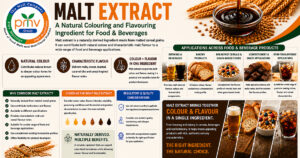
Malt extract is obtained from malted grains such as barley through the process of extraction. The difference between malt extract and sugar lies in the fact that while sugar primarily adds sweetness, malt extract adds sweetness as well as other properties of malt, including its specific flavour and colour.

What Is Malt Extract?
Malt extract is a high-strength product derived from malted grains. In the malting process, the grains go through a process of germination, during which natural enzymes are activated. This process further goes through extraction of soluble components, which include carbohydrates and flavouring agents.
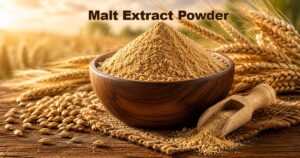
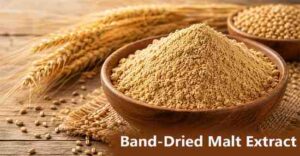
Malt extract can come in different forms and specifications, depending on the type of grain and processing technique, such as liquid malt extract and dry malt extract.
Composition and functionality may differ based on the grain and other factors. Thus, it is important for manufacturers to choose a malt extract that suits their particular formula.
Malt Extract vs Conventional Sugar
The key difference between malt extract and conventional sugar is the role each ingredient can play in a formulation.
| Feature | Conventional Sugar | Malt Extract |
| Sweetness | ✓ | ✓ |
| Malt flavour | — | ✓ |
| Natural colour contribution | Limited | ✓ |
| Product character | Primarily sweetness | Sweetness + malt character |
| Flavour enhancement | Limited | ✓ |
| Application versatility | High | High |
| Protein | Primarily negligible | May contain protein, depending on specification |
| Ingredient profile | Refined sweetener | Malt-derived ingredient |
Important: Malt extract should not automatically be considered a one-to-one nutritional replacement for sugar. Its suitability depends on the product formulation, required sweetness, solids, flavour profile and nutritional specifications.
1. Adds More Than Sweetness
One of the main advantages that malt extract offers is its potential to add more than just sweetness.
Unlike normal sugar, which has just one function in terms of adding sweetness, malt extract adds a mixture of:
• Sweetness
• Malt flavor
• Flavor
• Contributes color
• Character to the product
• Adds other grain-based elements to the mixture.
2. Enhances Taste and Aroma
The flavor spectrum offered by malt extract makes it possible to enhance the taste of foods and beverages.
Depending on how the product is used, malt extract may contribute flavors that are:
• Malty
• Toast-like
• Caramelized
• Cereal-like
• Rich and balanced
That feature of malt extract makes it applicable in foods and beverages, where flavor development is as important as sugariness.
3. Provides Natural Colour Contribution
Malting extract may also add colour to some formulae.
The natural colour in the malting extract will assist in formulating products that have more visual appeal along with the addition of the malt flavor.
Such uses are found in areas like:
• Bread products
• Biscuits/cookies
• Cereal products
• Light snack products
• Malt drinks
• Confectionary items
• Nutritional products
The final colour effect will be based on the malt extract used.
4. Creates a Richer Food and Beverage Experience
Products are expected to offer a blend of taste, smell and appearance qualities.
The use of malt extract can help in meeting this requirement since it offers a variety of sensory properties in one ingredient.
This is because the ingredient combines the various sensory properties which would have otherwise been derived from different sources.
5. Can Contribute to Product Character
Malt extract cannot be regarded solely as a source of sweetness. The specific flavor profile of the malt may affect the character of the final product.
For instance, in bakery items, the malt extract will support the cereal and toast flavors. In beverages, it may contribute to the malt flavor profile.
It all depends on the particular product and conditions of its production.
6. Protein and Nutritional Components
However, there is a possibility that malt extract contains proteins and other components derived from grains depending on the method of production and specifications of the product itself.
Therefore, malt extract might be beneficial for manufacturers during the development of their products regarding the functionality and nutrition of the ingredients.
Nevertheless, the nutritional content of the ingredients has to be evaluated based on the product specification.
Where Can Malt Extract Be Used?
The ingredient can be included into various food and beverage applications.
Bakery products
Malt extract can be used in:
• Bread
• Buns
• Cookies
• Biscuits
• Cakes
• Crackers
• Bakery premixes
Malt extract may add sweetness, malt flavor, color and overall product profile.
Cereal & Granola
Malt extract may enhance the natural flavor of cereals in breakfast cereals, granola and other cereal based products.
Malt extract may also help to develop a more flavorful profile when a sweetener and cereal flavor is required.
Beverages
Malt extract may be used in different malt beverages and functional beverages where distinctive malt flavor and sweetness is required from the product.
Nutrition products
Depending on the requirement and formulation, malt extract may be included in selected nutrition products.
Confectionery
Malt extract may provide characteristic flavor and sweetness in selected confectionery applications.
Snack foods
Malt extract may be used in selected snack formulations where cereal or toasted or malt flavor profile is desired.
Why Choose Malt Extract for Food and Beverage Formulation?
For manufacturers, ingredient selection is not only about sweetness. It is also about creating a product that delivers the desired taste, aroma, appearance and consumer experience.
Malt extract can be considered when a formulation requires:
Sweetness + Malt Flavour + Colour Contribution + Product Character
This combination gives malt extract a different positioning from conventional refined sugar.
Is Malt Extract Healthier Than Sugar?
It is a very relevant question.
Malt extract must not always be considered a healthier substitute to sugar. It contains sugars and carbohydrates, and there will be differences in the nutrient profile depending on the specifications of the particular product.
Its primary benefit is that it has functional properties besides sweetness, such as adding the flavour and color of malt.
Thus, the correct selection will depend on the purpose of the formulation. If the purpose is solely to achieve sweetness, ordinary sugar may do fine. If the purpose is to get the benefits of both sweetness and the malt flavor and color, then malt extract may be considered.
The manufacturer should take into account:
• Total sugars
• Carbohydrates
• Protein
• Calories
• Solids
• Intensity of sweetness
• Flavor profile
among other considerations.
Malt Extract as a Versatile Ingredient for Modern Food Products
There is a growing trend towards ingredients which have more than one role in the formulation in the food industry.
Malt extract fulfills this criterion in many uses since it has the capacity to add to the taste, aroma, flavor and color.
Product formulators now have the chance to make distinctive malt-based products for food and beverages instead of just sweet products.
Final Thoughts
Conventional sugar has an important application in food formulation; however, it is generally used as a sweetening agent. Malt extract, on the other hand, provides a more diverse sensory contribution, making the comparison of malt extract vs conventional sugar for food and beverages important for manufacturers looking for both sweetness and distinctive malt characteristics.
No matter whether you develop baked goods, cereals, beverages, snacks or nutritional products, selecting the correct malt extract specification is a key to success. The choice between malt extract and conventional sugar depends on the desired sweetness, flavour, colour, solids and overall product formulation.
There is more to malt extract than just sweetness!
FAQ
1. What is malt extract?
Malt extract is an ingredient that is made through the concentration of malted grains. It contains carbohydrates and naturally derived malt constituents and is available in different forms such as liquid and dry malt extracts.
2. Is malt extract the same as sugar?
No. Malt extract and sugar are different ingredients. While sugar is used for providing sweetness, malt extract not only provides sweetness but also adds malt flavour, color and other grain-derived components.
3. Can malt extract replace sugar?
Malt extract can potentially replace or partly replace sugar in the recipe, but it is not necessarily an alternative. Formulators need to take into account the required levels of sweetness, solids, flavor, color and nutrition.
4. Is malt extract a natural sweetener?
Malt extract is a malt-based ingredient containing naturally derived sugars produced through the malting and extraction processes. Whether it can be called a “natural sweetener” or not depends on the specification and labeling regulations.
5. Does malt extract contain sugar?
Yes. Malt extract contains naturally occurring sugars and carbohydrates. Composition may depend on malt extract specification and production process.
6. Does malt extract contain protein?
Protein content can be present in malt extract depending on the product and specification. Please see the technical specification and nutritional data for more information.
7. What does malt extract taste like?
Malt extract has the typical sweet, malty and cereal flavoring. In certain products and processing it can give toasted and caramel notes.
8. Can malt extract give color to the food?
Yes. Malt extract can contribute color to the certain types of food and beverage products. Intensity of color may vary depending on type of malt extract, dosage and processing conditions.
9. What foods are using malt extract?
Malt extract is used in bakery products, biscuits, cereals, granola, beverages, snacks, confectionery and certain nutrition products.
10. Is malt extract suitable for beverages?
Yes. Malt extract can be used in certain beverage products.
11. What is the difference between liquid malt extract and dry malt extract?
Liquid malt extract contains higher level of moisture, whereas dry malt extract is concentrated to the powder form. The choice depends on the processing needs, storage, handling and formulation.
12. How to choose the right malt extract?
The right malt extract depends on your application and functionality needed. Consider factors such as sweetness, color, flavor, solids, viscosity, protein and processing before selection.